
When the Cornea Loses Its Capacity to Regenerate
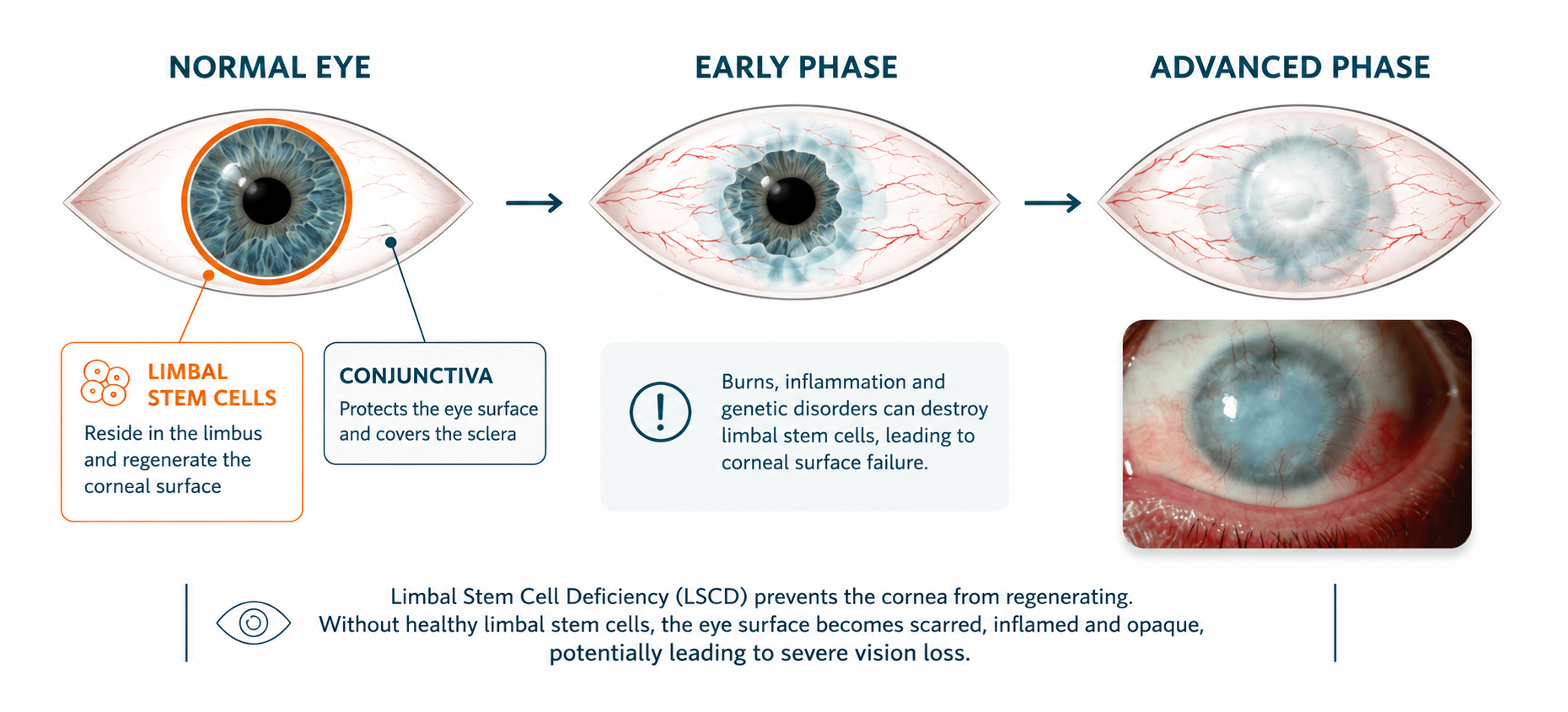
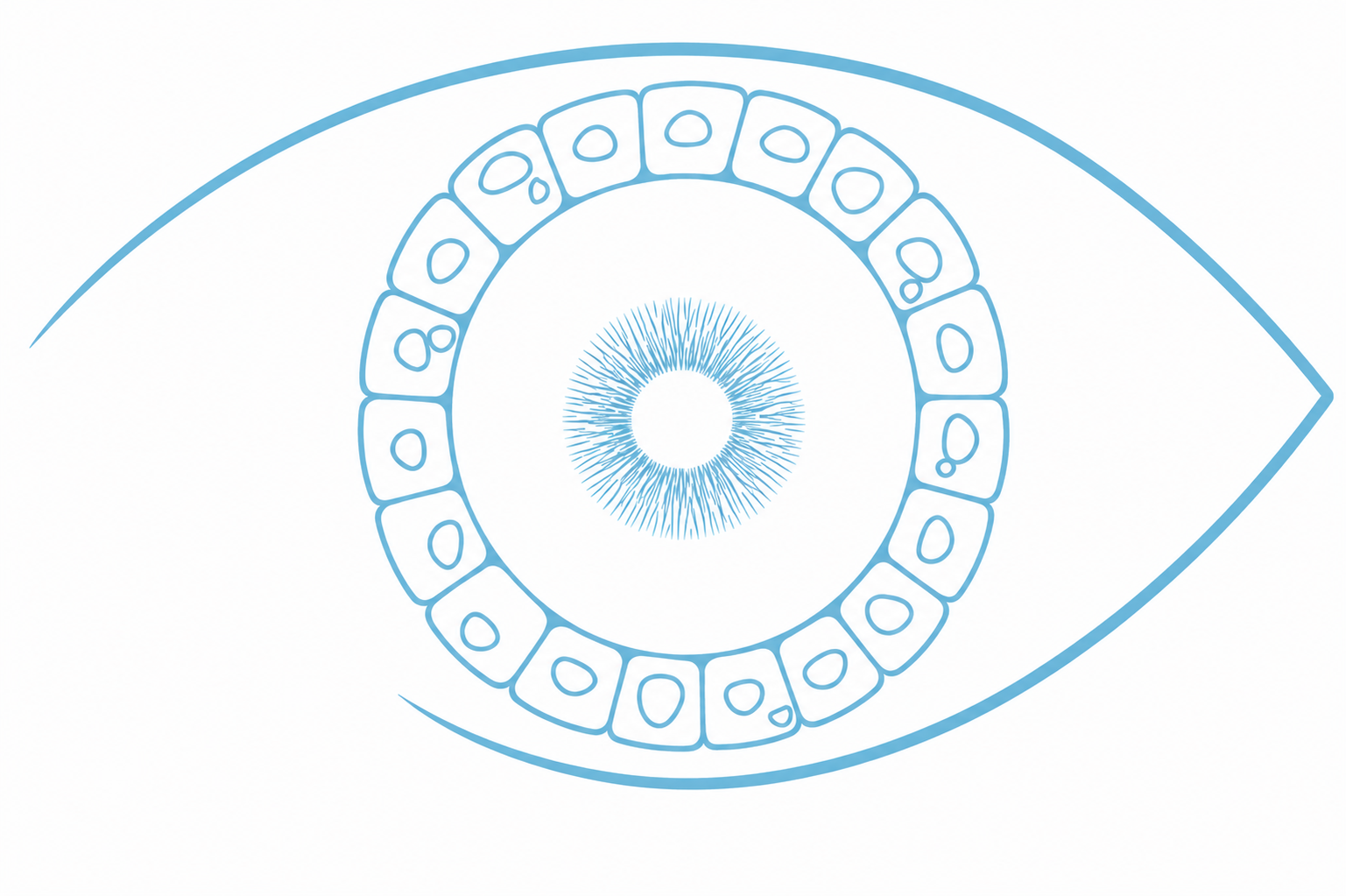
The corneal epithelium is continuously renewed throughout life. This regenerative capacity depends on limbal stem cells located at the border between the cornea and conjunctiva. These cells maintain a healthy, transparent corneal surface and provide a barrier that prevents conjunctival tissue from growing over the cornea.
What Happens in Limbal Stem Cell Deficiency?
Limbal Stem Cell Deficiency (LSCD) occurs when the limbal stem cell population is lost or becomes dysfunctional following injury or disease. Without a functional limbal stem cell compartment, normal regeneration of the corneal epithelium is disrupted.
Patients may develop persistent epithelial defects, inflammation, corneal vascularization and progressive loss of corneal transparency. Severe LSCD can cause chronic pain, substantial visual impairment and blindness.
A Disease in Need of Regenerative Solutions
Conventional corneal transplantation alone cannot restore a damaged limbal stem cell compartment. For patients with severe LSCD, restoring a functional population of limbal stem cells therefore represents an important regenerative strategy to rebuild and maintain a healthy ocular surface.