
What Is Limbal Stem Cell Deficiency?
Our eyes are constantly exposed to the outside world. Every blink, particle of dust and small injury places demands on the transparent surface of the cornea. Yet in a healthy eye, this surface has a remarkable capacity to renew itself.
A small population of specialized stem cells plays a central role in this process: limbal stem cells.
The stem cells at the edge of the cornea
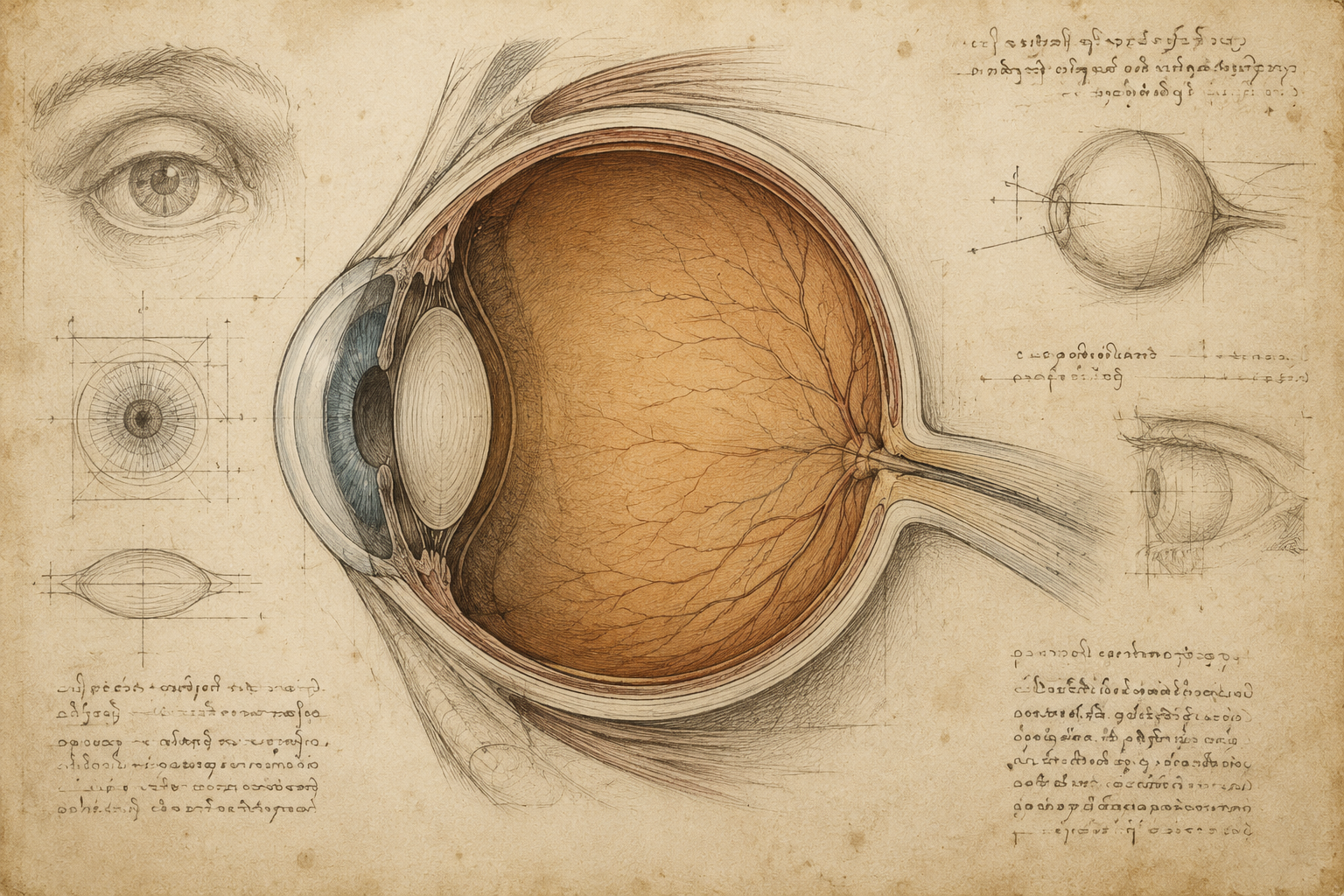
The cornea is the transparent tissue at the front of the eye that helps focus light and provides an important protective barrier.
At the border between the transparent cornea and the white part of the eye lies a narrow region called the limbus. This region contains limbal epithelial stem cells, which generate the cells needed to maintain and repair the corneal epithelium — the outermost cellular layer of the cornea.
In simple terms, these stem cells provide the cornea with a continuous source of new epithelial cells.
What happens when limbal stem cells are lost?
Limbal Stem Cell Deficiency, or LSCD, occurs when there are too few functional limbal stem cells to properly maintain the corneal surface.
LSCD can arise for different reasons. These include chemical or thermal injuries to the eye, inflammatory and immune-mediated diseases, certain genetic conditions, infections and damage associated with some ocular procedures or other external insults.
The condition can affect part or all of the limbus and may involve one eye or both eyes.
When the limbal stem cell system is severely compromised, normal regeneration of the corneal surface becomes increasingly difficult. The ocular surface can become unstable, and blood vessels and conjunctival-like tissue may progressively extend over areas of the normally transparent cornea.
For patients, this can result in symptoms including pain, sensitivity to light, recurrent problems with the corneal surface and impaired vision. In severe cases, LSCD can lead to substantial loss of vision.
Why can't a conventional corneal transplant simply solve the problem?
This is an important distinction.
In LSCD, the underlying problem is not necessarily just damaged transparent corneal tissue. The regenerative system responsible for maintaining that tissue has itself been damaged or lost.
Replacing the cornea alone therefore does not restore the missing population of limbal stem cells.
This is one reason why regenerative approaches aimed at restoring a functional corneal epithelium have become an important area of ophthalmology and cell therapy research.
Restoring the regenerative capacity of the ocular surface
Different approaches to treating LSCD have been developed depending on the cause, severity and whether one or both eyes are affected. These include medical management of the ocular surface as well as surgical and cell-based approaches.
For severe disease, transplantation of limbal tissue or expanded limbal epithelial cells can provide a new source of cells capable of rebuilding and maintaining the corneal surface.
At Corcellys Therapeutics, LSCD is the starting point for our work in regenerative medicine for the ocular surface. Our research focuses on how advances in stem cell biology, cell manufacturing and cryopreservation could contribute to the development of practical and scalable regenerative cell therapies for patients with severe corneal disease.
Learn more about LSCD
For readers interested in learning more about the disease, its diagnosis and current management: